The Voice That Time Can’t Touch
Stevie Nicks walks on stage, shawl flowing, eyes sparkling with that familiar mix of mystery and mischief. One note from her smoky voice, and decades melt away. You’re not just hearing music — you’re feeling something ancient and deeply human. At 78, the woman they call the White Witch of Rock isn’t slowing down. She’s just getting started again.
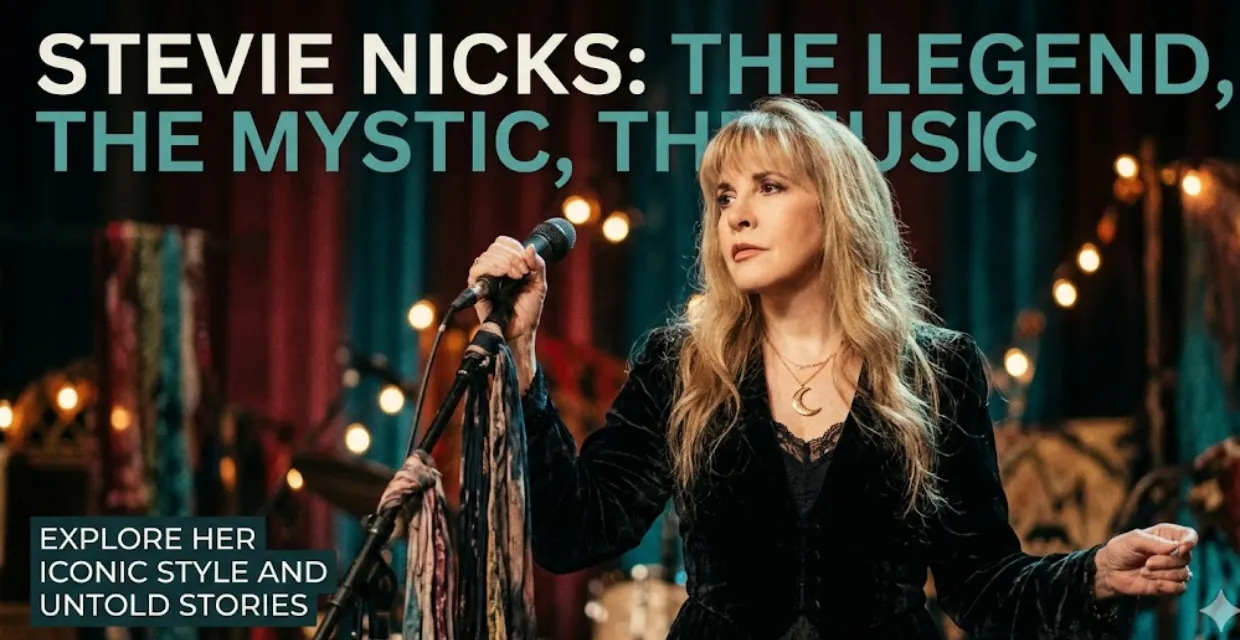
Her story isn’t just about hits and awards. It’s about a woman who turned heartbreak into poetry, vulnerability into power, and a chiffon shawl into a signature that screams I am here.
From Humble Dreams to Fleetwood Mac Magic
Born Stephanie Lynn Nicks on May 26, 1948, Stevie grew up moving between Arizona and California. She met Lindsey Buckingham as a teenager, and their musical (and romantic) partnership would change music history.
When they joined Fleetwood Mac in 1975, the band was struggling. Then came the self-titled album with Stevie’s “Rhiannon” — a song that felt like it summoned something supernatural. One year later, Rumours exploded. Despite the band’s personal chaos — breakups, betrayals, and heavy hearts — they created one of the best-selling albums ever.
Stevie’s contributions like “Dreams,” “Gold Dust Woman,” and “Sara” weren’t just songs. They were emotional confessions wrapped in mystical imagery. She turned pain into something beautiful that millions could claim as their own.
The Solo Star Who Blazed Her Own Path
After Rumours, Stevie refused to be defined by the band. Her 1981 solo debut Bella Donna went to No. 1, featuring the fierce “Edge of Seventeen” and the haunting “Leather and Lace” with Don Henley.
She collaborated with legends like Tom Petty and Prince. Her voice became a symbol of feminine strength in rock — soft yet unbreakable, dreamy yet grounded.
Through it all, she faced challenges: addiction, health scares, and industry pressures. But Stevie emerged stronger, always writing her way through the darkness.
Why Stevie’s Magic Feels More Relevant Than Ever
In an era of fleeting fame, Stevie Nicks represents something rare: authenticity that lasts. Her songs capture the messiness of love, loss, and self-discovery without apology.
Younger generations discovered her through TikTok virality of “Dreams” and covers by artists like Harry Styles, Taylor Swift, and Sabrina Carpenter. At the recent Met Gala, Stevie stunned audiences singing “Landslide” with Sabrina — a beautiful passing of the torch.
She’s influenced countless female artists who cite her as inspiration for blending vulnerability with power. Her style — flowing dresses, platform boots, dramatic shawls — remains endlessly copied.
The Comeback That Has Fans Buzzing in 2026
This year feels special. Stevie is on tour, playing to adoring crowds. Reports swirl about The Ghost Record, her first new solo album in 15 years. Fans are also whispering about a possible Fleetwood Mac documentary and even reunion hints with Lindsey Buckingham.
She celebrated her 78th birthday yesterday, and the outpouring of love across social media shows her impact hasn’t dimmed.
Why This Matters Now
In a world obsessed with youth, Stevie Nicks reminds us that creative power deepens with time. She’s proof that you can evolve without losing your essence. Her music offers comfort in chaos and courage in uncertainty.
Whether you’re a longtime fan who wore out Rumours cassettes or a Gen Z listener finding “Landslide” for the first time, Stevie connects generations. She shows that the most powerful magic comes from being unapologetically yourself.
The Eternal Enchantress
Stevie Nicks didn’t just survive rock ‘n’ roll — she redefined it. Her voice still gives us chills. Her words still heal hearts. And her spirit still whispers: You can be soft and strong. You can break and rise again.
As she continues this new chapter with fresh music and live shows, one thing is certain: the White Witch’s spell is unbreakable. And we’re all still happily under it.
What’s your favorite Stevie Nicks song? The one that got you through the hardest time? Share it below — because her music has always been about connection.