There’s a place in Seoul where history doesn’t whisper—it breathes.
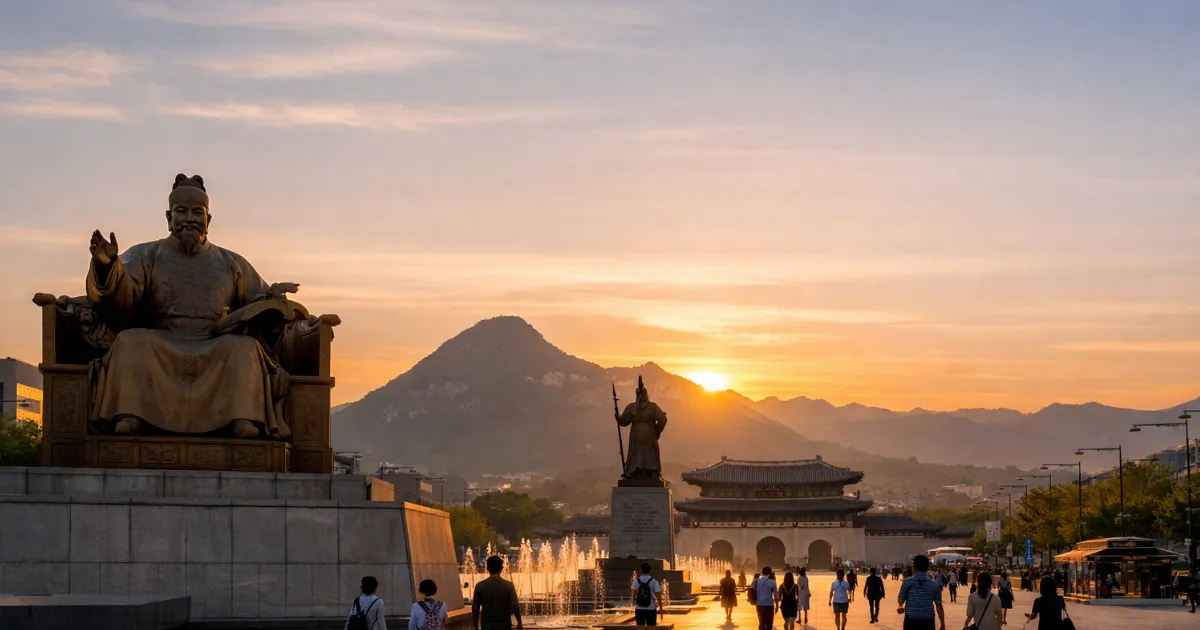
Stand in the middle of Gwanghwamun Square, and you’ll feel it instantly. The mountains frame the skyline. The statues watch silently. And the rhythm of modern life flows around centuries of memory.
This isn’t just a tourist attraction. It’s South Korea’s emotional ground zero.
The Heartbeat of Seoul
Located in the center of Seoul, Gwanghwamun Square stretches toward the iconic Gyeongbokgung Palace, the grand royal palace of the Joseon Dynasty.
Behind you stands the statue of Admiral Yi Sun-sin. Ahead, King Sejong the Great—the creator of Hangul—sits proudly overlooking the square.
Every direction tells a story.
Families gather here on weekends. Office workers pass through during lunch breaks. Travelers pause, cameras in hand. But beneath the calm surface lies a space that has shaped a nation’s voice.
A Stage for History and Democracy
Where Voices Rise
Gwanghwamun Square has witnessed some of South Korea’s most defining political protests.
From candlelight demonstrations to historic calls for reform, this square has been more than pavement—it has been a platform for democracy.
It’s where ordinary citizens stood together, peacefully, demanding change. And change came.
For many Koreans, this isn’t just geography. It’s proof that collective voices matter.
The 2022 Transformation: A New Era
In 2022, the square underwent a major redesign. The space was expanded, greenery was added, and pedestrian access improved.
The transformation wasn’t just physical.
It symbolized renewal—a blending of tradition and sustainability. Wide walking paths now invite reflection. Water features cool the summer heat. Cultural events feel more open and inclusive.
The new Gwanghwamun Square feels less like a crossroads and more like a living park woven into the city’s identity.
Culture, Connection, and Everyday Life
More Than a Landmark
Tourists may come for the palace views.
But locals come for something deeper.
Street performances, art installations, seasonal festivals, and national celebrations unfold here year-round. During autumn, the golden leaves create a cinematic scene. In winter, lights shimmer against crisp night skies.
The square connects past to present in a way few places can.
It’s common to see children learning about King Sejong’s legacy while couples take sunset photos just steps away. History and daily life coexist effortlessly.
Why Gwanghwamun Square Matters Now
South Korea stands at the crossroads of tradition and global influence.
From K-pop to technology, its cultural footprint continues to grow worldwide. Yet at the center of it all lies Gwanghwamun Square—a reminder of roots, resilience, and identity.
As Seoul modernizes at lightning speed, spaces like this anchor the city. They offer pause in a fast-moving world.
In an era where public spaces are shrinking globally, Gwanghwamun Square feels expansive—not just physically, but emotionally.
It represents dialogue.
It represents unity.
It represents hope.
A Personal Moment in the Square
Visit at sunrise, and you’ll understand its quiet power.
The city hasn’t fully awakened yet. The mountains behind Gyeongbokgung glow softly. Joggers pass without speaking. The statues cast long shadows across the pavement.
For a moment, it feels timeless.
And then, slowly, Seoul hums back to life.
That balance—between stillness and movement—is what makes Gwanghwamun Square unforgettable.
The Takeaway: More Than a Destination
Gwanghwamun Square isn’t just a stop on a travel itinerary.
It’s where South Korea remembers, reflects, and reinvents itself.
Whether you come seeking history, culture, or simply a place to breathe in the middle of a global city, this square offers something rare—a connection to something bigger than yourself.
And in today’s fast, fragmented world, that kind of space feels more important than ever.