The first time you see Mabel “hop” into that robotic beaver body, you don’t just laugh—you flinch a little.
Because under the chaos and comedy, Hoppers is really asking: what happens to us when the wild places that healed us start to disappear?
For anyone who’s ever had a favorite tree, trail, or patch of sky, this movie hits uncomfortably close.
What Hoppers Is Really About
Mabel Tanaka is a 19‑year‑old animal lover whose safe place has always been a forest glade she shared with her grandmother.
By the time we meet her in Hoppers, that sanctuary is under threat from a development project that treats nature like an obstacle, not a home.
When a new technology lets Mabel move her consciousness into a lifelike robotic beaver, the story snaps into focus.
Suddenly she can speak to the animals she’s always defended—only to discover that they have their own anger, fears, and agendas.
The Hoppers movie uses this wild premise to explore:
Climate anxiety and eco‑grief
How good intentions can spiral out of control
The thin line between protecting nature and trying to control it
Under the bright Pixar palette is a very real question: are we trying to save the planet, or bend it to our will one more time?
The Emotional Core: Mabel, George, and the Glade
At the center of the film is the bond between Mabel and George, the beaver who becomes both her ally and her mirror.
He understands the cost of losing a home—his dam, her glade—and yet he’s the one who insists that “people places and animal places are all just places, and we’re all in this together.”
That line feels designed to linger.
Through their relationship, Hoppers avoids easy villains.
The mayor who wants to pave the forest isn’t cartoonishly evil; he represents a mindset that values convenience over connection, four minutes off a commute over a lifetime of memories.
Mabel’s arc is quietly devastating:
She starts as a young activist convinced she knows what’s best.
She ends as someone who’s learned to listen—to animals, to people, and to the land itself.
It’s that emotional humility that gives the Hoppers movie its staying power.
Storytelling, Laughs, and Visual Chaos
This isn’t a slow lecture on the environment; it’s a kinetic, often hilarious sci‑fi comedy that just happens to be about our shared future.
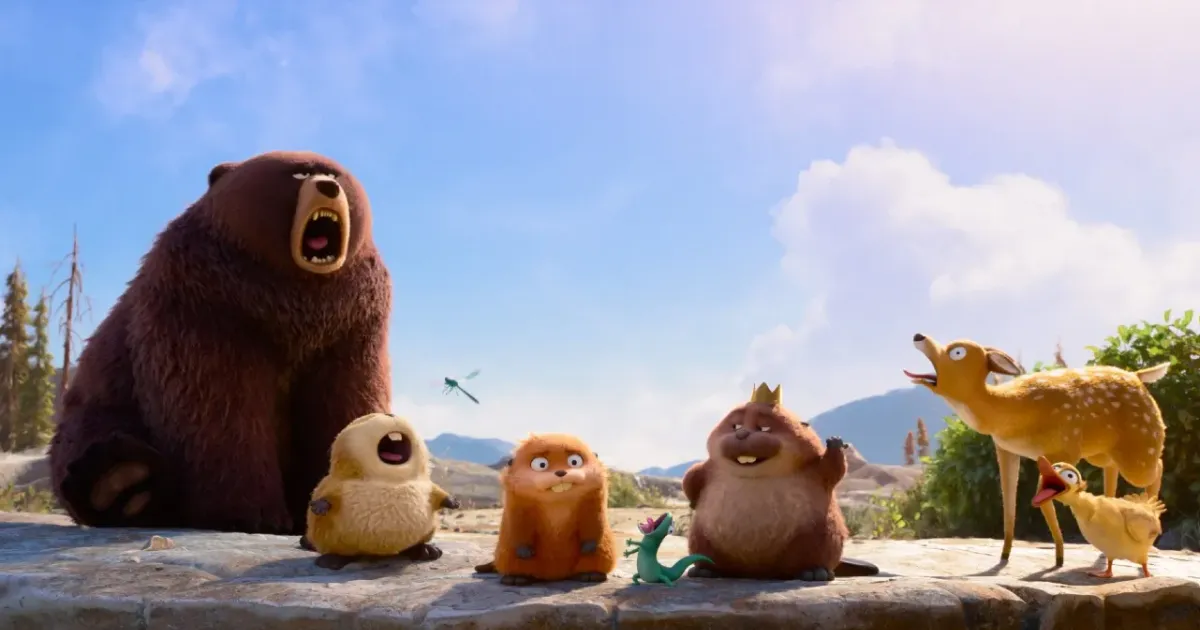
The robotic animal “hoppers” allow for slapstick body‑swap humor, high‑speed chase scenes through dams and highways, and a council of animal monarchs that feels both ridiculous and oddly profound.
Pixar leans into:
Fast, meme‑able visual gags
Warm, intergenerational moments between Mabel and her grandmother’s memory
A carefully balanced tone: silly enough for kids, sharp enough for adults
That blend is why Hoppers is primed for Google Discover—people aren’t just searching for a review; they’re looking for validation that the movie made them feel something big and hard to name.
Why This Matters Now
Hoppers lands in a world where climate headlines feel endless and exhausting.
Many young viewers see their own anxiety in Mabel’s racing thoughts and desperate need to “fix” everything.
This movie speaks directly to that generation by:
Showing activism that is messy, imperfect, and sometimes misguided
Suggesting that empathy—across species, politics, and priorities—is more powerful than outrage alone
Reminding us that nature isn’t an aesthetic; it’s a relationship
In a news feed full of disasters and hot takes, the Hoppers movie stands out because it lets us grieve, laugh, and hope in the same 100 minutes.
It doesn’t promise a neat solution, but it does show that listening, compromise, and shared responsibility are still possible.
Final Takeaway: More Than “Just” an Animated Film
Hoppers isn’t only about a girl in a robotic beaver saving a forest; it’s about how we decide what’s worth saving in the first place.
If you’ve ever felt powerless scrolling past climate stories, this film quietly hands some of that power back.
You walk out of Hoppers thinking less about the CGI and more about your own “glade”—the place, person, or memory you’d fight for.
And that’s what makes this movie not just a fun watch, but a story people will keep sharing, debating, and revisiting long after the credits roll.