

The Woman Behind the Force
In the golden age of New Hollywood, one woman quietly held the power to transform chaos into legend. Marcia Lucas, the Oscar-winning film editor and former wife of George Lucas, passed away on May 27, 2026, at age 80. Her death from metastatic cancer has sparked a wave of reflection—not just about her technical brilliance, but about the heart she poured into stories that still define our cultural imagination.

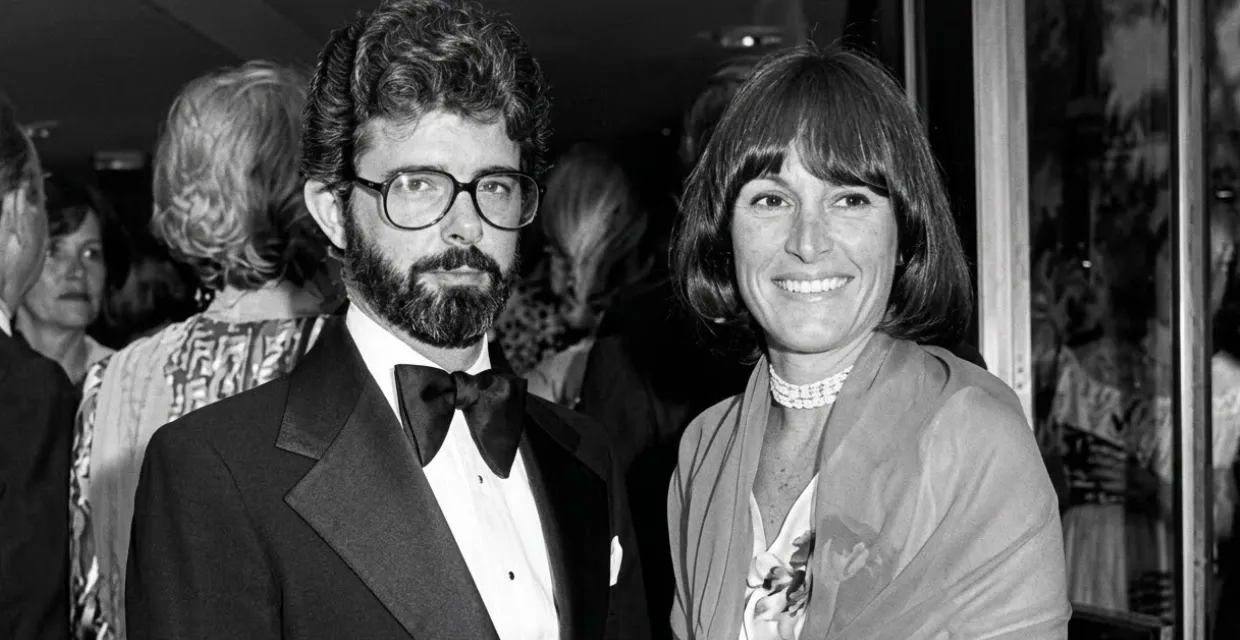
Imagine sitting in a dark editing room in the mid-1970s. The footage for a risky space opera called Star Wars feels scattered, uneven, almost unworkable. Enter Marcia. With sharp instincts and emotional intuition, she reshaped scenes, tightened pacing, and infused the film with genuine feeling. Many who worked on it say she gave it its soul.
A Partnership That Changed Cinema
Marcia Lou Griffin was born on October 4, 1945, in Modesto, California—the same hometown as George Lucas. Their paths crossed in 1967 while apprenticing under legendary editor Verna Fields. They married in 1969 and became creative partners in every sense.
Together, they built something extraordinary. Marcia co-edited American Graffiti (earning an Oscar nomination), worked on Martin Scorsese classics like Alice Doesn’t Live Here Anymore and Taxi Driver (as supervising editor), and played a central role in the original Star Wars trilogy.
Her contributions to A New Hope (1977) were game-changing. She helped restructure the first act for better flow, elevated the emotional stakes of Obi-Wan’s death, suggested key moments like Leia’s kiss for luck, and refined the thrilling Death Star trench run. The iconic wipe transitions that became a signature of the saga? Often credited to her vision.
In 1978, Marcia stood on the Academy Awards stage with co-editors Paul Hirsch and Richard Chew, accepting the Oscar for Best Film Editing—the only Oscar the Lucas family ever won for Star Wars. George himself has never received one for directing or writing in the franchise.
The Heart vs. The Head
Film historians and colleagues often describe Marcia as the emotional core to George’s visionary head. She wasn’t just cutting film; she was crafting connection. Audiences didn’t just watch Luke Skywalker’s journey—they felt it. That humanity helped turn a risky sci-fi project into a cultural phenomenon.
Yet after their divorce in 1983—amid the release of Return of the Jedi—Marcia’s role was increasingly downplayed in official narratives. She largely stepped away from Hollywood to raise their adopted daughter, Amanda, and later had another daughter. The split was reportedly painful and complex, with Marcia once reflecting that she didn’t think George had ever fully forgiven her.
In rare recent interviews for documentaries like Icons Unearthed: Star Wars, she spoke candidly but generously, debunking myths that painted her as the sole savior while acknowledging the collaborative magic of the team.
Why Marcia Lucas Matters Now
In an era when we’re finally recognizing the invisible labor behind blockbuster films—especially the contributions of women—Marcia’s story feels more relevant than ever. She was a trailblazer in a male-dominated field, proving that editing isn’t just technical; it’s storytelling at its most intimate.
Her passing comes at a time when Star Wars continues to evolve (and sometimes divide fans). Looking back, her work reminds us what made the originals timeless: not just spectacle, but heart, hope, and human connection.
Why This Matters Now Today, as Hollywood grapples with representation and credit, Marcia Lucas stands as a powerful example. She helped define one of the greatest franchises in history yet often remained in the shadows. Her legacy challenges us to look closer at the teams behind the masterpieces and to honor the editors, the unsung heroes who shape how stories land in our hearts.
A Lasting Legacy of Emotion and Craft
Marcia Lucas didn’t seek the spotlight. She sought excellence—compulsive, gifted, and deeply human. From the dusty streets of Modesto to the stars of a galaxy far, far away, her touch elevated cinema and touched millions.
As fans revisit the original trilogy or introduce it to new generations, they’ll feel her influence: the perfect cut, the swelling emotion, the moment that makes you believe in heroes again. In a world that moves fast and often forgets, her story invites us to slow down, appreciate the craft, and remember the women who helped build our favorite worlds.
Rest in peace, Marcia. You didn’t just edit films—you helped us all dream bigger. May the Force always be with the heart you brought to the screen.