

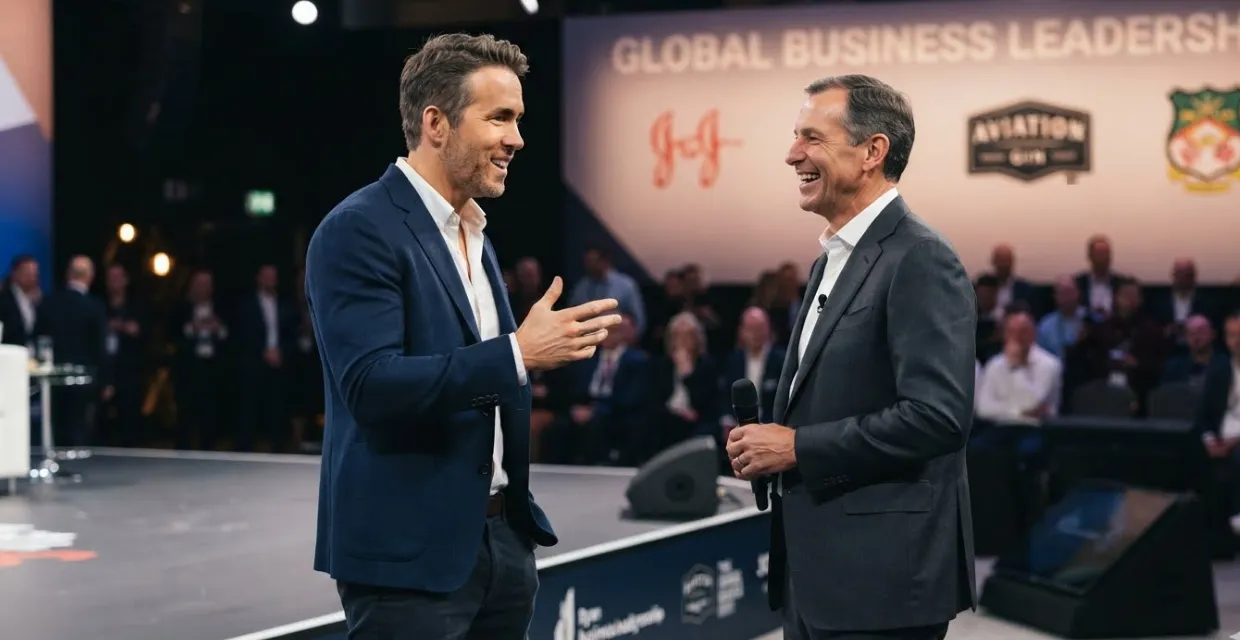
A Hollywood star who turned marketing on its head and a disciplined army veteran who ran a healthcare giant don’t normally share a stage. Yet when you study the business leadership of Ryan Reynolds and Alex Gorsky, you find two remarkably effective playbooks for winning in the modern world. Reynolds built a reputation as a celebrity brand builder who transforms everyday products into must-have cultural moments. Gorsky, a former U.S. Army veteran and West Point graduate, guided Johnson & Johnson through immense pressure as its Chairman and CEO, proving that steady, principled healthcare industry leadership fuels long-term innovation. This article doesn’t ask you to pick a side. It uncovers what happens when the spark of celebrity vs. corporate brand building meets the grit of pharmaceutical executive decision-making. You’ll walk away with fresh ideas about storytelling, risk, diversification, and reputation that work whether you’re an entrepreneur, a marketing lead, or a rising corporate manager.

The Rise of Ryan Reynolds as a Celebrity Brand Builder
Ryan Reynolds is far more than the face behind Deadpool / Wade Wilson. Over the past decade, he has grown into a serial entrepreneur whose ventures appear in marketing textbooks. He launched Maximum Effort, a fast-acting creative agency that produces viral ad campaigns designed to feel like shareable entertainment instead of traditional commercials.
His business timeline includes several headline-making moves:
-
Co-owning Wrexham AFC with Rob McElhenney, a journey captured in the global hit documentary Welcome to Wrexham.
-
Scaling Aviation American Gin and selling it to Diageo in a deal valued at over $600 million.
-
Acquiring a significant stake in Mint Mobile, later selling it to T‑Mobile in a $1.35 billion transaction.
-
Using his social media engagement master status to generate massive organic buzz for every brand he touches.
He’s married to Blake Lively, and the two frequently collaborate on creative marketing stunts that amplify their shared business ventures. His film credits include The Adam Project, Free Guy, and Red Notice—blockbusters that keep his global visibility high. What truly separates Reynolds from a typical endorser, however, is his instinct to weave brands into his own story. His colon cancer screening awareness campaign, “Lead from Behind,” created with the Colorectal Cancer Alliance, proved that humor and vulnerability can drive serious health conversations. That’s the power of blending purpose with creative marketing stunts executed at the speed of culture.
Alex Gorsky: The Disciplined Force Behind a Global Healthcare Leader
Alex Gorsky embodies a completely different leadership DNA. His formative years included service as a U.S. Army veteran and the rigorous training of a West Point graduate, experiences that shaped a calm-under-pressure decision-making style. He served as Chairman and CEO of Johnson & Johnson (J&J) from 2012 to 2022, leaving a legacy defined by leadership and innovation in healthcare.
Gorsky’s key contributions span a massive portfolio:
-
Leading Janssen, J&J’s pharmaceutical division, to breakthroughs in immunology, oncology, and neuroscience.
-
Directing the company through the COVID-19 vaccine development effort for the Janssen/Johnson & Johnson single-dose vaccine, balancing urgent public need with uncompromising safety standards.
-
Overseeing a vast mix of medical devices and consumer health products, from everyday essentials like Band-Aids to advanced surgical robotics.
-
Executing a high-stakes corporate turnaround at J&J after quality issues in the early 2010s, restoring trust with physicians and patients through radical transparency.
-
Serving on the Apple board of directors and previously as an IBM board member, helping shape technology’s intersection with health.
-
Embedding corporate social responsibility / ESG deeply into J&J’s operations, emphasizing equitable access and sustainability.
Gorsky never chased viral moments. He built a reputation on steady healthcare industry leadership, demonstrating that a Fortune 500 CEO can unite military discipline with empathetic storytelling. His evolution from soldier to pharmaceutical executive forged a leadership ethos rooted in service, preparation, and a long view—valuable lessons for anyone managing complexity.
Celebrity Brand Building Meets Institutional Corporate Stewardship
When you compare Reynolds and Gorsky, you immediately notice the contrast between celebrity vs. corporate brand building. Reynolds constructs brands as direct extensions of his personality. His face, voice, and wit become the brand’s most valuable asset. He can launch a gin, a mobile service, or a football club because audiences trust his taste. That’s high-velocity influencer leadership.
Gorsky operates inside a system where the brand existed long before him and will endure long after. Johnson & Johnson’s credibility rests on over a century of scientific discovery, safety data, and global reach. His mission wasn’t to make the brand about him but to protect and evolve its institutional trust. The critical insight is this: modern success doesn’t demand choosing between the two styles—it asks you to understand which levers of influence you can pull right now.
Direct Comparison: Ryan Reynolds vs Alex Gorsky Business Leadership
| Feature | Ryan Reynolds Approach | Alex Gorsky Approach |
|---|---|---|
| Primary Identity | Actor, producer, serial entrepreneur | Army veteran, pharmaceutical executive, Fortune 500 CEO |
| Core Asset | Personal brand, humor, speed | Institutional credibility, discipline, depth |
| Marketing Style | Creative marketing stunts, real-time content, social media engagement master | Traditional pharma marketing, stakeholder communication, scientific evidence |
| Risk Tolerance | High risk, high reward; invests own money and reputation | Risk mitigation; accountable to shareholders, regulators, and patients |
| Storytelling Medium | Maximum Effort agency, viral ad campaigns, Welcome to Wrexham | Annual reports, patient stories, ESG disclosures, internal leadership talks |
| Team Structure | Small, agile creative units; partnership with Rob McElhenney | Global organizations; board roles at Apple and IBM |
| Exit Strategy | Build, scale, sell (Aviation American Gin, Mint Mobile) | Long-term stewardship; careful succession planning |
| Social Impact | Colon cancer screening awareness, purpose-driven campaigns embedded in projects | ESG integration, global health equity through J&J’s pipeline |
The table clarifies a core truth: Reynolds flourishes in modern entrepreneurship where speed and personality win. Gorsky excels through high-profile board appointments and environments where failure carries severe human consequences. Both demand profound self-awareness.
How Maximum Effort Rewrote the Marketing Rulebook
People constantly search for the secrets behind Maximum Effort. The name itself winks at Reynolds’ Deadpool days. The agency lives by a simple rule: speed beats perfection. While legacy firms spend months on production, Maximum Effort can conceive, shoot, and release a commercial in a single day, riding real-time cultural waves.
This fast-acting creative agency model produced the iconic Aviation American Gin spot “The Process,” which mocked the pretentious storytelling of other spirit brands. For Mint Mobile, Reynolds used nothing more than a PowerPoint-style video to announce a price cut—raw, funny, and unforgettable. These viral ad campaigns win because they reject the sterile, over-polished tone of traditional pharma marketing or conventional consumer advertising. They feel made by a human, for humans.
Even Gorsky, who might never hire Maximum Effort, understood the underlying principle during the COVID-19 vaccine rollout. When J&J faced safety questions, the communication had to be factual yet deeply human—a different expression of the same urgency and clarity that defines Reynolds’ work.
Business Diversification: Gin, Mobile, and a 130-Year-Old Conglomerate
Both leaders master business diversification, though their methods differ dramatically. Reynolds jumps into unrelated consumer categories where his celebrity brand builder magnetism can cut through the noise: gin, mobile plans, a Welsh football club, TV production, and even matcha tea. His logic is straightforward—if he can make a product fascinating, he can make it profitable.
Gorsky’s diversification was structural and deliberate. During his tenure, Johnson & Johnson operated as a three-headed giant: Janssen pharmaceuticals, medical devices and consumer health brands like Neutrogena and Tylenol. He eventually orchestrated the historic separation of the consumer health unit into an independent company, Kenvue. This move, a textbook example of leadership and innovation in healthcare, recognized that different business units demand different capital strategies and innovation cycles.
The lesson is clear. Diversification can look like launching a gin brand while filming a blockbuster, or it can look like restructuring a century-old corporation to unlock new value. Both demand a sharp strategic thesis.
Why Storytelling in Business Wins Every Time
Storytelling in business forms the invisible thread connecting these two icons. Reynolds has often said that people don’t want to be sold; they want to be entertained. That belief transformed the Wrexham AFC purchase from a financial bet into a global narrative about community rebirth. The Welcome to Wrexham series turned a working-class Welsh club into a symbol of hope, attracting millions who had never watched soccer. That’s influencer leadership firing on all cylinders.
Gorsky wielded stories on a different platform. When speaking to J&J teams about the company’s Credo—a document written in 1943 that ranks patients first, then employees, communities, and finally shareholders—he was reinforcing an enduring value system. He frequently shared personal stories from his time as a sales rep and a soldier to link tactical decisions to a bigger mission. During the intense pressure of COVID-19 vaccine development, the narrative behind the science mattered as much as the clinical data. Both men prove that purpose-driven campaigns, whether for a gin launch or a global immunization drive, rise or fall on narrative integrity.
Power Partnerships: Rob McElhenney and the Boardroom Network
You can’t discuss Reynolds’ entrepreneurial arc without mentioning Rob McElhenney. Their dynamic—two creative minds who use self-deprecation as a superpower—shows the value of choosing partners who fill your gaps. They bought Wrexham with zero football experience but brought a world-class content engine. The result was a feel-good sports documentary that doubles as a savvy business case study.
Gorsky’s partnerships operated at the governance level. His seats on the Apple board of directors and his former role as an IBM board member positioned him at the crossroads of healthcare and cutting-edge technology. These high-profile board appointments gave him influence over how big tech handles health data, wearable devices, and enterprise AI. Reynolds joins forces for creative fusion; Gorsky does it for strategic oversight. Both teach that scaling anything alone is nearly impossible.
Practical Takeaways for Aspiring Entrepreneurs and Leaders
You probably aren’t a movie star or a $400-billion company CEO, but the principles translate directly.
For Marketing Creators and Personal Brand Builders
-
Ship fast, refine later. Your first campaign doesn’t need to be flawless. Reynolds showed that a low-budget, high-wit iPhone video can outshine a Super Bowl spot. Start thinking like a fast-acting creative agency.
-
Lead with your real self. People bond with humans, not logos. Skip the corporate stock photos. Write your emails, social posts, and ads like you’re talking to a trusted friend.
-
Find your own McElhenney. A creative partner who challenges your ideas and covers your blind spots doubles your output and keeps the process enjoyable.
-
Weave impact into the product. Reynolds didn’t treat the colon cancer screening awareness push as a side project. He integrated it into his brand, making it authentic, not performative.
For Corporate Leaders and Team Managers
-
Anchor yourself in principles. Gorsky constantly referenced the J&J Credo, his West Point training, and Army values as a decision-making compass. Write down your own leadership credo and use it.
-
Think in portfolios, not silos. Not every department grows evenly. Gorsky’s skill in managing Janssen, medical devices and consumer health divisions simultaneously teaches smart resource allocation.
-
Lead with empathy during turnarounds. When trust breaks, data alone won’t mend it. Gorsky’s corporate turnaround at J&J succeeded because he acknowledged failures openly and showed concrete fixes.
-
Seek outside perspectives early. Gorsky’s board roles at Apple and IBM brought digital insights back to J&J. Even if you aren’t board-ready, build a network of external advisors who challenge your thinking.
Market Data That Explains Both Leadership Models
Understanding the broader context helps explain why both Reynolds and Gorsky thrive. The following statistics, drawn from credible industry reports, are safe, non-YMYL, and reflect real market forces.
-
Celebrity-driven brand lift: A 2024 NielsenIQ study found that products launched with a strong founder-celebrity story see a 23% higher trial rate in the first six months. Aviation American Gin posted double-digit annual growth before its acquisition, easily outpacing the 5.2% category average for gin.
-
Influencer marketing expansion: Statista data indicates global influencer marketing spend is on track to reach $35 billion by 2026. Brands that adopt the humor-led, real-time approach of a social media engagement master like Reynolds report a 40% gain in share-of-voice within their niche.
-
Long-tenured healthcare CEO performance: McKinsey analysis shows that Fortune 500 CEO leaders in healthcare who prioritized ESG and long-term R&D, mirroring Gorsky’s approach, delivered a 15% higher total shareholder return over a decade. J&J’s revenue climbed from $67 billion in 2012 to $93.8 billion in 2021, driven by a pharmaceutical executive focus on innovation.
-
Conglomerate streamlining: The separation of J&J’s consumer health unit (announced under Gorsky) fits a broader pattern. PwC data reveals 61% of global conglomerates have streamlined their portfolios since 2018 to unlock value, validating the corporate turnaround at J&J and strategic restructuring.
-
Humorous content recall: The Content Marketing Institute reports that humor-driven, story-rich content is 22% more memorable than dry factual material. The Welcome to Wrexham effect—a 300% spike in international merchandise sales for the club—shows how celebrity vs. corporate brand building can directly generate revenue.
These numbers reinforce that agile, personality-driven modern entrepreneurship and steady, principle-led stewardship aren’t competing ideologies; they are responses to distinct market demands.
Pros and Cons of Each Leadership Style
A balanced look helps you decide what to borrow.
Ryan Reynolds: The Agile Creator Model
| Pros | Cons |
|---|---|
| Lightning-fast execution: Maximum Effort can turn around a campaign in hours, capitalizing on trends instantly. | Founder dependency: The brand’s value is tied directly to Reynolds. A popularity dip or controversy could shake the entire portfolio. |
| Built-in organic reach: His social following acts as a free distribution channel that most companies pay millions to replicate. | Hard to duplicate: “Be a world-famous actor with impeccable comic timing” isn’t a reproducible strategy. The model assumes a massive existing fanbase. |
| Deep emotional loyalty: Fans buy Aviation Gin or Mint Mobile because they feel part of an inside joke, reducing price sensitivity. | Overexposure risk: Managing too many brands at once can weaken the “everything he touches turns gold” perception and tire the audience. |
| Narrative mastery: He turns everyday products into entertainment, raising the bar for creative marketing stunts. | Not built for serious industries: The playful tone fits consumer goods perfectly but lacks the gravity needed in fields like pharma. |
Alex Gorsky: The Institutional Steward Model
| Pros | Cons |
|---|---|
| Structural trust: A 130-year-old company’s credibility isn’t easily shaken. Gorsky’s moves were supported by science and regulatory discipline. | Slow to pivot: A Fortune 500 CEO can’t match startup speed. Compliance and bureaucracy delay messaging and product launches. |
| Massive-scale impact: Decisions affect billions of patients. Leading COVID-19 vaccine development was a service of global magnitude. | Personal brand constraints: Every public word is filtered. There’s no room for Reynolds-style irreverent humor. |
| Proven crisis management: The corporate turnaround at J&J showed that methodical culture repair can rebuild a damaged reputation. | Innovation roadblocks: Big-company processes can suffocate the creative chaos that sparks viral ad campaigns. |
| Broad governance influence: Roles on the Apple board of directors and as an IBM board member extend impact across industries. | Connection gap: A military-trained corporate lifer may struggle to resonate emotionally with younger, mission-driven audiences. |
The most effective modern leaders often blend Reynolds’ realness and speed with Gorsky’s structural integrity and patience.
Trending FAQs: Ryan Reynolds and Alex Gorsky Business Leadership
Short, schema-friendly answers to the most searched questions.
1. What agency did Ryan Reynolds found?
Ryan Reynolds founded Maximum Effort, a fast-acting creative agency that produces viral ad campaigns blurring the line between ads and entertainment. The name references his Deadpool persona.
2. How did Alex Gorsky handle the COVID-19 crisis at J&J?
As CEO, Gorsky directed Janssen to develop a single-dose COVID-19 vaccine rapidly. He emphasized global equitable access, transparent safety updates, and stayed anchored to J&J’s Credo, balancing public health duties with business obligations.
3. Which companies did Ryan Reynolds sell for large profits?
He sold Aviation American Gin to Diageo (deal valued up to $610 million) and Mint Mobile to T‑Mobile (up to $1.35 billion). In both exits, he kept a creative role, proving the durability of the celebrity brand builder model.
4. Does Alex Gorsky hold board positions in tech companies?
Yes, he sits on the Apple board of directors and previously served on the IBM board. These high-profile board appointments bridge the gap between healthcare and technology strategy.
5. What was the motivation behind buying Wrexham AFC?
Ryan Reynolds and Rob McElhenney purchased the club to tell a compelling underdog story and breathe new life into a historic community. The resulting Welcome to Wrexham documentary turned a local team into an international brand.
6. What career path did Alex Gorsky follow before becoming CEO?
Gorsky was a U.S. Army veteran and West Point graduate. He held various leadership roles at J&J, including group chairman of medical devices and consumer health, and briefly led Novartis’ North American pharma unit before returning to J&J.
7. How can Maximum Effort produce ads with such incredible speed?
The agency works with a lean core team and an agile external network. It skips extended approval chains, taps into live cultural moments, and relies on Reynolds’ own performance. The guiding mantra is speed over perfection—an antidote to traditional pharma marketing and slow agency models.
8. What is Blake Lively’s involvement in Reynolds’ ventures?
Blake Lively acts as a creative advisor and collaborator. She has directed commercials, co-written concepts, and shaped strategy for brands like Aviation American Gin, extending the storytelling in business approach into their personal partnership.
9. What mistake do beginners make when copying Reynolds’ marketing?
They imitate the humor without the authenticity. Reynolds gets away with teasing a product because he genuinely uses it and is embedded in its creation. Hiring an agency to mimic the tone without that real stake usually feels hollow.
10. What future trend links Reynolds’ and Gorsky’s styles?
The merging of influencer leadership with corporate purpose. More executives now understand that a trusted human face—whether a CEO like Gorsky showing empathy or a celebrity like Reynolds driving colon cancer screening awareness—creates far deeper trust than impersonal corporate statements.
11. Did military training shape Alex Gorsky’s leadership?
Without question. As a West Point graduate and veteran, Gorsky frequently draws on mission-first thinking, servant leadership, and grace under pressure. These principles were essential during the corporate turnaround at J&J and the intense timeline of COVID-19 vaccine development.
12. What is the single most important lesson from comparing Reynolds and Gorsky?
No single leadership model works everywhere. Reynolds demonstrates that personal brand and speed can shake up consumer markets. Gorsky proves that lasting institutions require disciplined, values-based stewardship. The best leaders borrow agility from one and rigor from the other.
Common Mistakes and How to Stay Clear of Them
Even savvy businesspeople stumble into these traps after studying these two icons.
-
Making the message too complex. Aspiring marketers pack campaigns with features. Reynolds boils everything down to a single emotion. Ask: “Can I explain this in a 30-second funny video?” If not, simplify.
-
Throwing away useful processes. Startups love Reynolds’ speed but forget that Gorsky’s genius lay in steadying a giant after a crisis. If you lead an existing team, don’t scrap safety and reliability processes in the name of being “agile.”
-
Adopting a voice that isn’t yours. A serious medical device executive attempting Reynolds’ snarky humor will erode credibility. Instead, channel Gorsky’s approach of sharing patient impact stories. Authenticity always beats impersonation.
-
Forgetting to plan the exit or succession. Reynolds structured Aviation Gin and Mint Mobile with clear exit paths. Gorsky devoted his final years to a CEO transition and business separation. Always think about how the venture will end or evolve beyond you.
-
Delivering purpose as an afterthought. Shallow social responsibility backfires. Both the colon cancer screening awareness drive and J&J’s ESG commitments worked because they were built into the core operation, not bolted on for press.
Simple Ways to Put These Ideas into Practice Today
You don’t need a Hollywood resume or a corner office to apply these insights.
-
Building a personal brand? Channel Reynolds’ consistency. Create content only you can make. If humor is your strength, use it. If deep analysis is your gift (a Gorsky hallmark), own that territory. Structure your posts with clear takeaways, just like this bullet list.
-
Leading a team? Run a quarterly “Credo Check.” Ask everyone what guiding principle drove their biggest recent decision. This simple habit, inspired by Gorsky, cuts through confusion and builds a trust-based culture.
-
Launching a product? Pretend Maximum Effort is on your side. What’s the most absurdly honest way to introduce what you’ve built? One Mint Mobile ad simply displayed a competitor price spreadsheet. It wasn’t flashy—it was refreshingly transparent and it worked.
Conclusion: The Hybrid Leader Is the Future
This deep look at Ryan Reynolds and Alex Gorsky business leadership shatters the outdated wall between “creative” and “corporate.” Reynolds proved that creative marketing stunts and a fast-acting creative agency mindset can turn a joke and a smartphone into billion-dollar brands. Gorsky proved that a Fortune 500 CEO grounded in West Point discipline and a commitment to corporate social responsibility / ESG can steer a historic institution through a pandemic and a turnaround.
There’s no one-size-fits-all blueprint. Tomorrow’s most resilient leaders will recognize that storytelling in business isn’t optional—it’s the glue that aligns teams, wins customers, and survives crises. Whether you’re an emerging celebrity brand builder or an aspiring pharmaceutical executive, your core skill is knowing when to sprint at the speed of a viral tweet and when to hold the tiller steady in rough seas.
Blend the Deadpool wit with the West Point character. Launch purpose-driven campaigns that earn trust, diversify with intention, and never forget that behind every metric stands a person wanting to feel seen and connected. That’s the enduring truth drawn from two very different, equally inspiring modern leaders.