The Uncomfortable Truth About Adam22 We’re Not Ready To Face
He sits in the frame of his podcast, calm, almost detached, while the world burns in his comment section. You’ve seen the clips. You’ve felt that visceral jolt of shock, maybe even disgust, scrolling through your feed late at night.
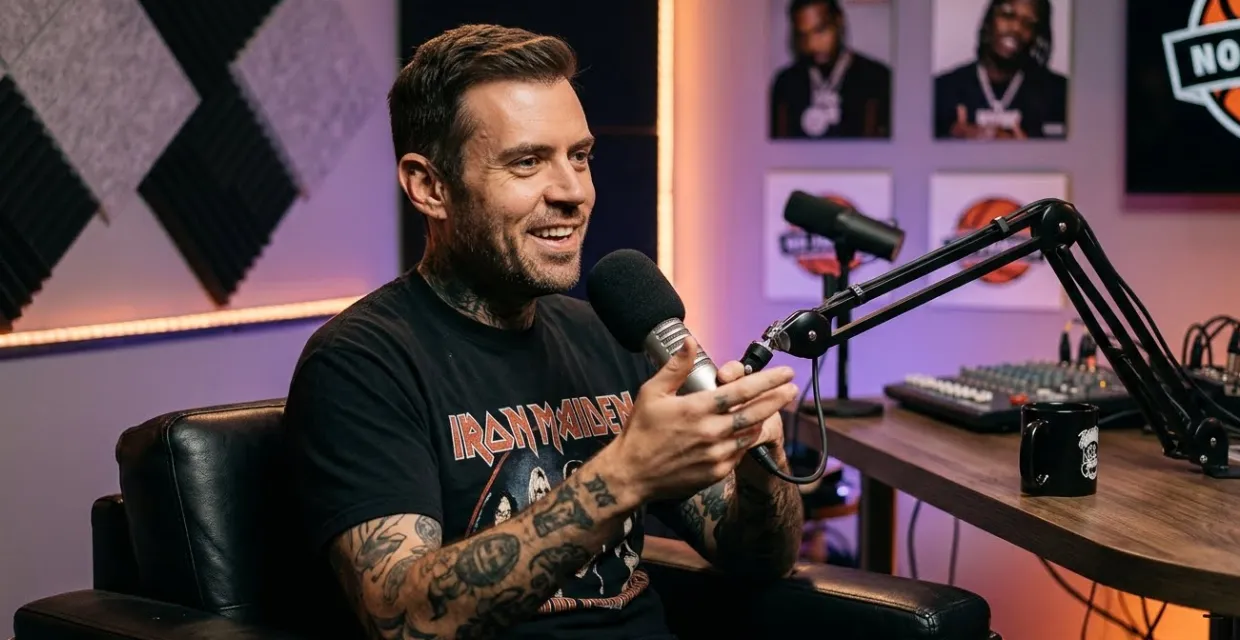
But Adam Grandmaison—better known as Adam22—is no longer just a person. He is a mirror.
And the reflection staring back at us is profoundly uncomfortable.
The Architect of Post-Wing Era Chaos
To the uninitiated, Adam22 looks like the epicenter of internet anarchy. As the founder of No Jumper, he built an empire from the ground up, giving a platform to underground hip-hop voices no one else would touch. That legacy of discovery—of finding raw, unfiltered talent—was the foundation of his authority.
He was the curator. The safe pair of hands for dangerous art. But somewhere along the way, the lines dissolved.
The studio walls that once echoed with the hungry verses of underground rappers began to house something else entirely. The business model shifted from music discovery to pure, unadulterated spectacle. It’s no longer about the art; it’s about the crisis. The more controversial the guest, the more fractured the logic, the higher the view count climbs.
The Anatomy of a Viral Meltdown
The Setup: A calm studio aesthetic that contrasts violently with the chaos to come.
The Trigger: Guests are often selected not for their musical prowess but for their potential volatility.
The Reaction: A cycle of outrage, clip farming, and trending topics that feeds the algorithm for days.
Why We Can’t Look Away (Even When We Want To)
This is where the story gets personal. It’s not just about him anymore; it’s about us. There is a strange psychological gravity that keeps us pinned to these car crashes in 4K.
Experts call it “negative bias”—our brain’s ancient wiring that forces us to stare at danger so we can learn how to avoid it. Adam22 understands this wiring more intuitively than any clinical psychologist. He doesn’t just host a show; he hosts a stress test for the human condition, and we line up to watch it fail.
You see, the true genius, or perhaps the tragedy, of the platform is its neutrality. He doesn’t judge his guests. He gives them the rope, and the microphone, and waits. It’s this emotional flatline that unsettles us. In a world craving authentic human reaction, his lack of shock is the most shocking thing of all.
The Controversy That Changed Everything
The narrative shifted seismically when his wife, Lena The Plug, entered the content equation. It was no longer just a podcast; it became a reality show where the boundaries of privacy, marriage, and commerce evaporated in real-time.
This wasn’t just clickbait. It was a calculated detonation of social norms. The fallout was immediate: a tidal wave of criticism mixed with a confusing layer of record-breaking traffic. It forced a question we’re still grappling with: Is everything fungible when the price is right?
The Values Friction
Authenticity: We demand it, but are we ready for its most extreme, monetized form?
Guardrails: Who decides the limit when the internet rewards breaking them?
Legacy: Can you build a community on the ashes of controversy alone?
Why This Matters Now
We are living in the blueprint Adam22 built. The current digital landscape—where Telegram chat leaks become front-page news and streamers risk their lives for subscribers—is a direct descendant of the No Jumper model. The desperation for attention has been so heavily monetized that the “likes” have become a secondary reward. The primary currency is survival of the most viral.
This matters because we are raising a generation who view this transaction as normal. The emotional numbness required to host these spectacles has bled into the audience. We are losing our collective capacity to be healthily appalled.
The Final Reckoning
So here we are, stuck in a loop of our own making. Cursing the player, and maybe we should be cursing the game he perfected.
Adam22 is not the villain of this story, nor is he the hero. He is perhaps the ultimate post-modern journalist, holding up a broken lens to a fractured society and simply asking, “How does that make you feel?”
It should make us feel like demanding better. Not just from our content creators, but from the appetite within ourselves that clicks “play” when we know we should look away. The screens aren’t going dark anytime soon, but we still have a choice in what we allow to fill them.
Maybe it’s time we finally change the channel.